Culture
A Guest is a Gift from God: The Soul of Azerbaijani Hospitality
In Azerbaijan, welcoming a guest is not a courtesy — it is a sacred calling, captured in the ancient proverb 'Qonaq Allah qonağıdır': 'A guest is a gift from God.' From mountain villages to the winding lanes of Baku's Old City, this philosophy of qonaqpərvərlik — boundless, unconditional hospitality — shapes every encounter, every table, every cup of tea. Come to Azerbaijan, and you will not merely be a visitor; you will be received as a blessing.

Trip8Apr 24 • 13 min read
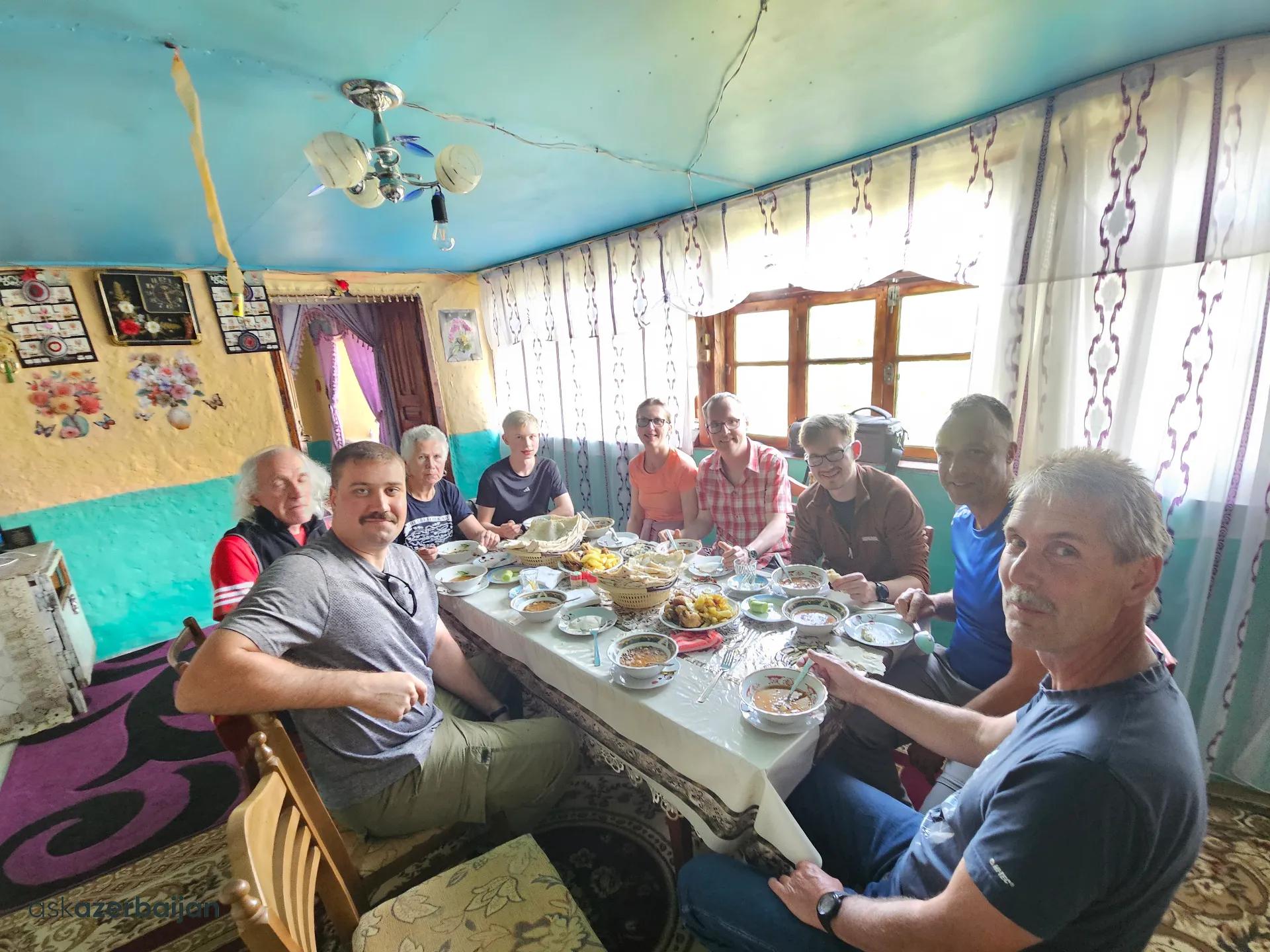
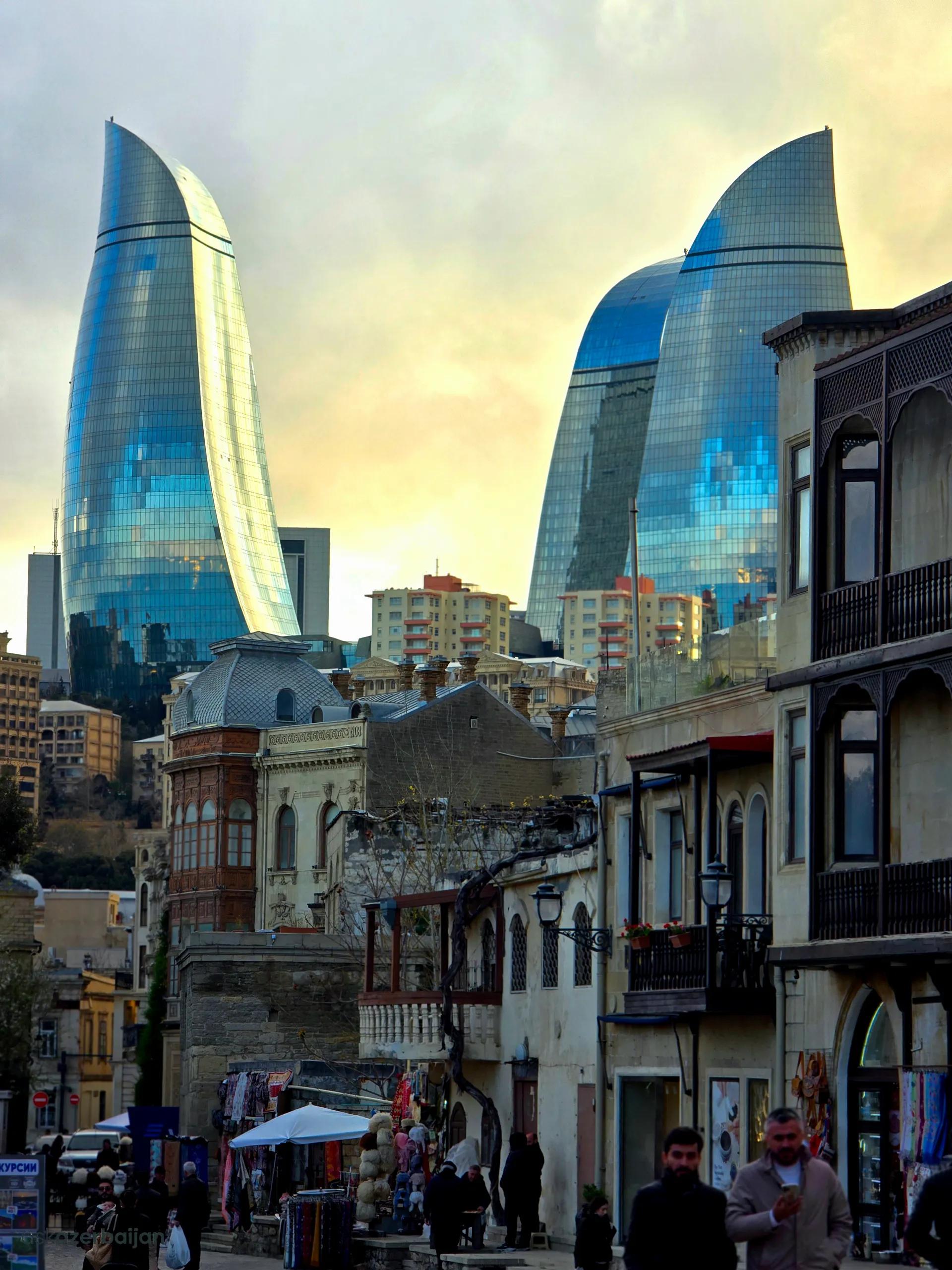
Photo by AskAzerbaijan
The door opens before you even knock. You are a stranger, arriving at dusk in a village tucked into the folds of the Caucasus Mountains, your map uncertain and your Azerbaijani nonexistent. Yet within moments you are inside — seated on cushioned divans, a tablecloth unfurling before you like a landscape of abundance. Bread appears. Then cheese, then walnuts, then a bowl of thick, dark jam. And finally, pressed gently into your hands, a small pear-shaped glass of amber tea, its warmth radiating through your palms like a quiet welcome home.
This is not a hotel. This is not a restaurant. This is someone’s home — and you are, without question, their guest.
There is a proverb in Azerbaijan that explains everything: ‘Qonaq Allah qonağıdır’ — ‘A guest is a gift from God.’ These are not decorative words stitched onto a souvenir. They are a lived philosophy, a moral compass, a social contract that has governed Azerbaijani life for centuries. To understand this proverb is to understand the soul of the country itself.
More Than Politeness: A Sacred Duty
In many parts of the world, hospitality is a service — something offered in exchange for money, goodwill, or social capital. In Azerbaijan, it is something else entirely. It is qonaqpərvərlik: a word that translates roughly as ‘hospitality’ but carries the weight of a spiritual obligation.
Another proverb illuminates this further: ‘Qonaq evin bəzəyidir’ — ‘A guest is the ornament of the house.’ The guest does not impose on the household; the guest elevates it. Their presence is an honor, not a burden. This belief is woven into the fabric of Turkic cultural heritage and has survived centuries of empire, migration, and modernity with remarkable resilience.
Guests — whether expected or unannounced, familiar or unknown, arriving at noon or midnight — are received with the same warmth. There is no such thing as a bad time to welcome someone. To turn a guest away is not merely impolite; it is considered a profound moral failure, a stain on the family’s honor. The host’s reputation, their standing in the community, their very sense of self is bound up in how generously they receive those who cross their threshold.
This is not performance. It is identity.
Words That Open Doors
Language, in Azerbaijan, is itself an act of hospitality. The Azerbaijani tongue is saturated with phrases of welcome, each one a small ceremony of care.
When you arrive, you will hear ‘Xoş gəlmisiniz’ — Welcome. It is said with eye contact, with warmth, with the full weight of meaning behind it. You will be ushered inside with ‘Buyurun’ — a word that means ‘please, come in’ or ‘please, help yourself,’ depending on the moment, but always means you are wanted here. When the table is ready, you will hear ‘Süfrəyə buyurun’ — Please come to the table — and it will feel less like an invitation and more like a gentle insistence.
And if you try to leave too soon? You will be met with a smile and a phrase that functions as both joke and law: ‘Bir stəkan çay içmədən getmək olmaz’ — You cannot leave without having a cup of tea.
Notice, too, that guests are addressed with the formal ‘siz’ rather than the informal ‘sən’ — a grammatical mark of deep respect, a signal that the person before you is not taken for granted. In Azerbaijani culture, language is not merely communication. It is an act of care, a way of saying: I see you. You matter. You are welcome here.
The Armudu: Where Every Conversation Begins
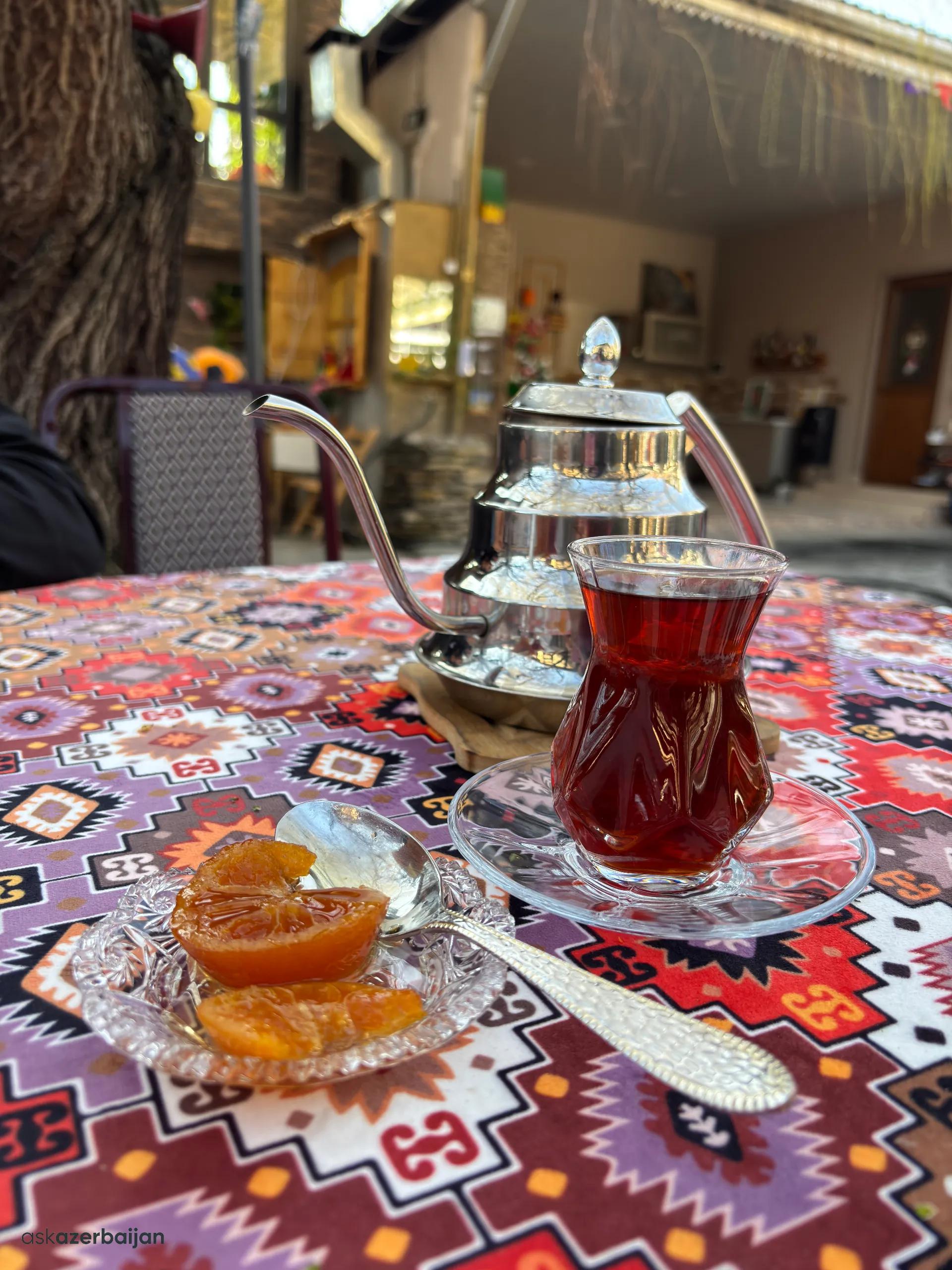
Before the food, before the stories, before anything else — there is tea.
Azerbaijani tea culture is ancient, intricate, and deeply beloved. Tea is served in the armudu — a small, pear-shaped glass whose name means exactly that: ‘pear’ in Azerbaijani. The shape is not accidental. The narrow waist keeps the tea hot at the top while the wider base cools slightly, allowing you to sip at your own pace. Holding the armudu with two hands is a sign of respect — a small gesture that speaks volumes.
The tea itself is black, brewed strong in a samovar — a traditional metal vessel that in many households has been passed down through generations, its copper sides worn smooth by decades of use. It arrives with lemon, with sugar loaf to hold between your teeth as you sip, with baklava and shekerbura and badambura, with dried fruits and small dishes of jam made from quince, fig, or cherry. Sometimes herbs are added to the brew — thyme, rose hips, mint, cloves — lending the cup a fragrance that seems to carry the landscape inside it.
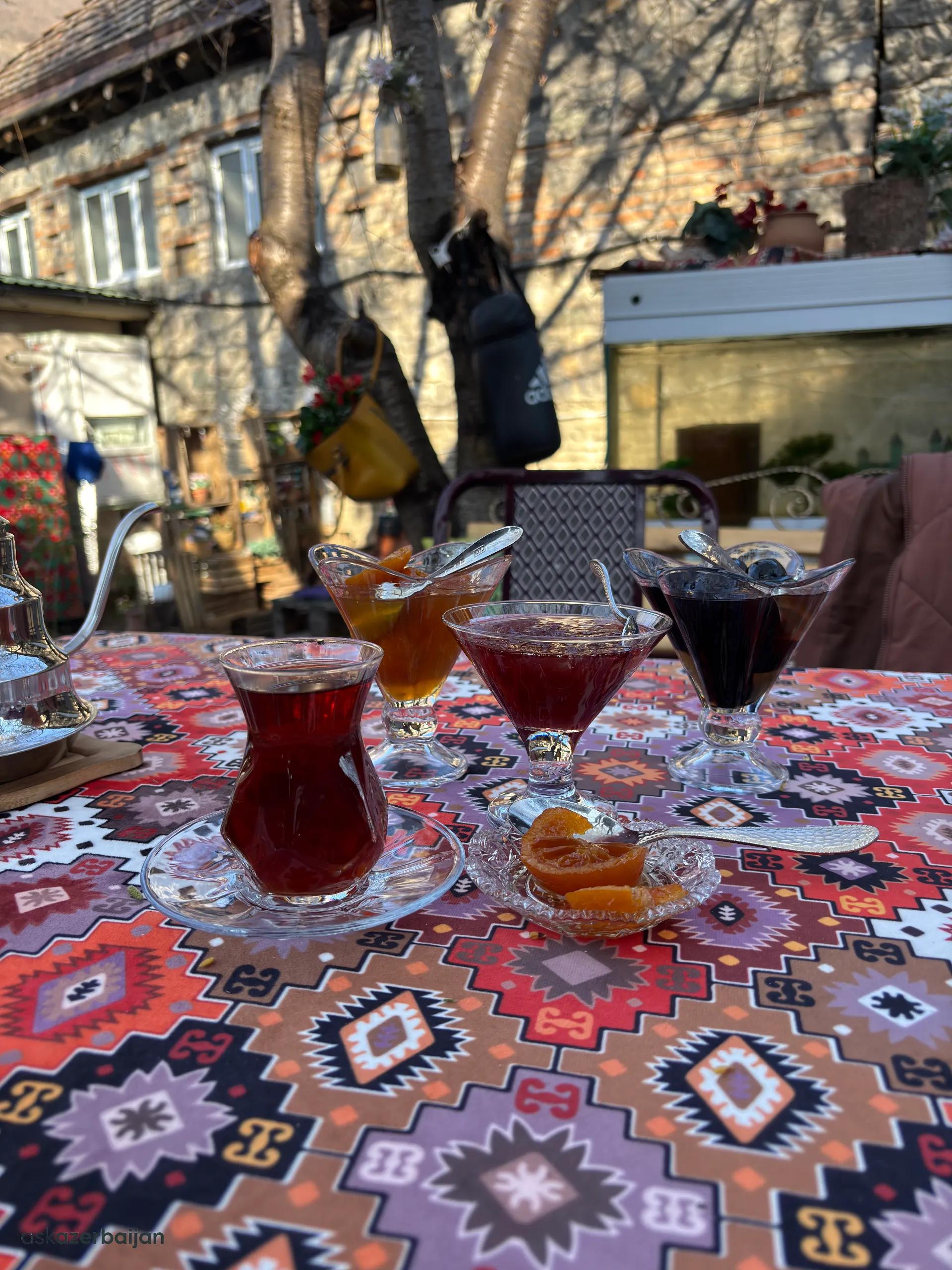
The chaykhana — the tea house — is where Azerbaijani social life has always unfolded. It is a place for conversation and storytelling, for settling disputes and sealing friendships, for the slow, unhurried exchange of news and ideas. In the chaykhana, time moves differently.
Azerbaijan’s tea culture runs so deep that in December 2022, at the 17th session of the UNESCO Intergovernmental Committee held in Rabat, Morocco, Azerbaijan and Turkey jointly had their tea culture inscribed on UNESCO’s Representative List of Intangible Cultural Heritage. It was a formal recognition of something Azerbaijanis have always known: tea here is not a beverage. It is a ritual.
More than 10,000 tons of tea are consumed in Azerbaijan every year. The country even grows its own, in the lush southern regions of Lankaran, Astara, and Masalli — a tradition that began in 1937 and continues today, producing leaves with a distinctive character shaped by the subtropical climate and the proximity of the Caspian Sea.
When you arrive as a guest, tea comes first — always. It is not a prelude to the meal so much as a gift of time: a chance to sit, to breathe, to share news, to let the journey fall away from your shoulders before the table is fully set.
The Süfrə: Azerbaijan’s Table of Abundance
When Azerbaijanis say they will feed you, they mean it in the most generous possible sense.
The süfrə — the feast table — is not assembled from what happens to be in the kitchen. It is a declaration. When guests arrive, the table is transformed: a landscape of generosity spreads across the cloth, dish by dish, until there is barely room for the plates themselves.
At the center, almost always, is plov — the beloved pilaf that is the cornerstone of Azerbaijani cuisine. UNESCO-listed and endlessly varied, plov in Azerbaijan comes in over 200 distinct varieties, each region and each family claiming its own version as definitive. Around it: dolma — grape leaves or vegetables stuffed with spiced meat and rice — and kebabs fragrant with smoke and saffron. Fresh herbs pile high on platters: tarragon, coriander, basil, spring onions. Pomegranate seeds glitter like jewels over meat dishes. Walnuts, dried fruits, and regional specialties fill every remaining corner of the table.
In Sheki, guests are pressed with the famous Sheki halva — a layered confection of rice flour, nuts, and spices, made by craftsmen who have guarded the recipe for generations. In Quba, the mountain air sharpens the appetite and the table answers with local cheeses, wild honey, and dishes that taste of altitude and tradition.
The süfrə is not simply food. It is a statement, made without words, to every person who sits down at it: You matter. You are welcome here. We have prepared this for you.
From Baku to the Mountains: Hospitality Has Many Faces
Azerbaijan is a country of remarkable geographic and cultural variety, and its hospitality takes a different shape in every corner — yet the spirit beneath it remains constant.
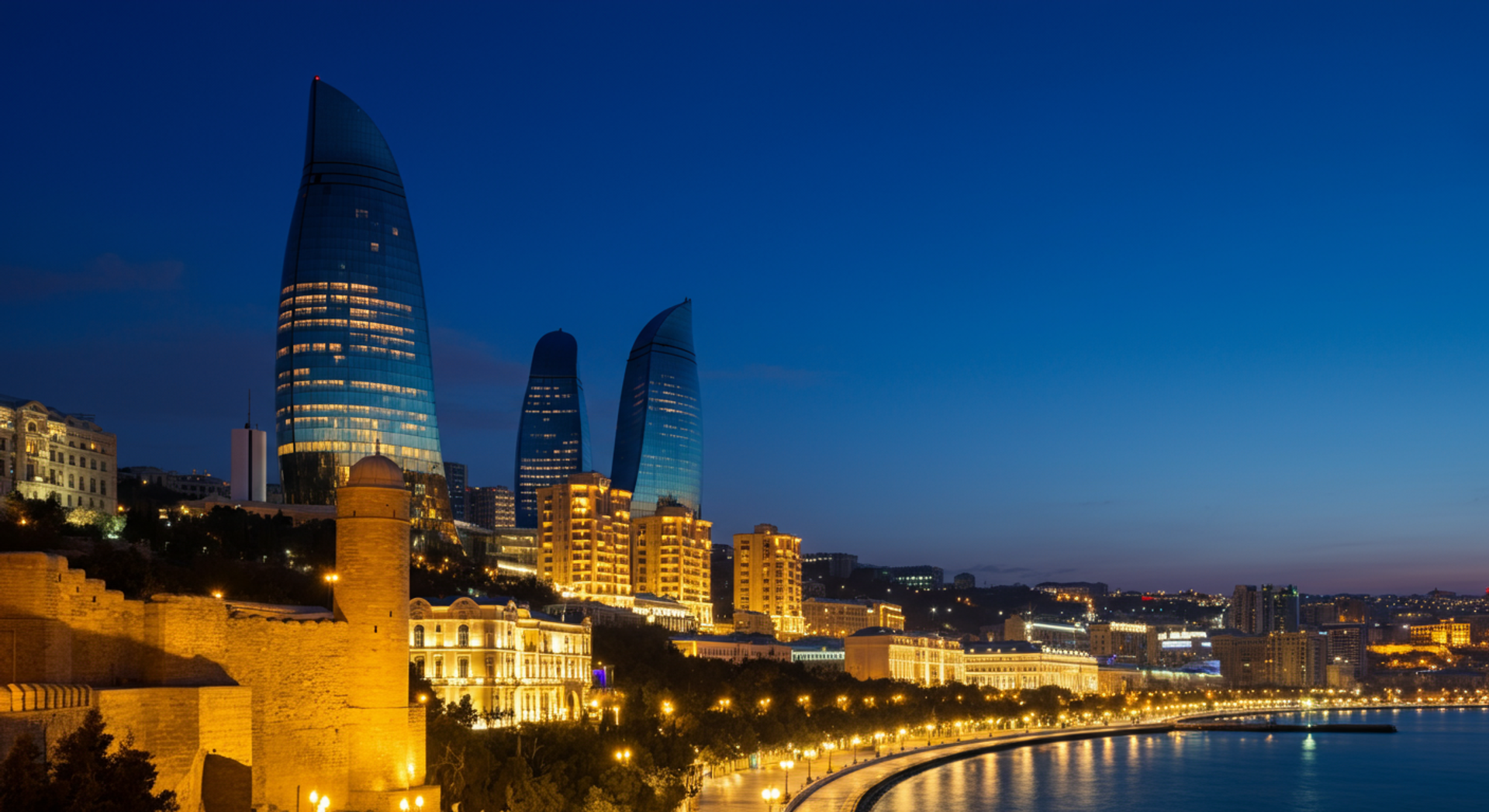
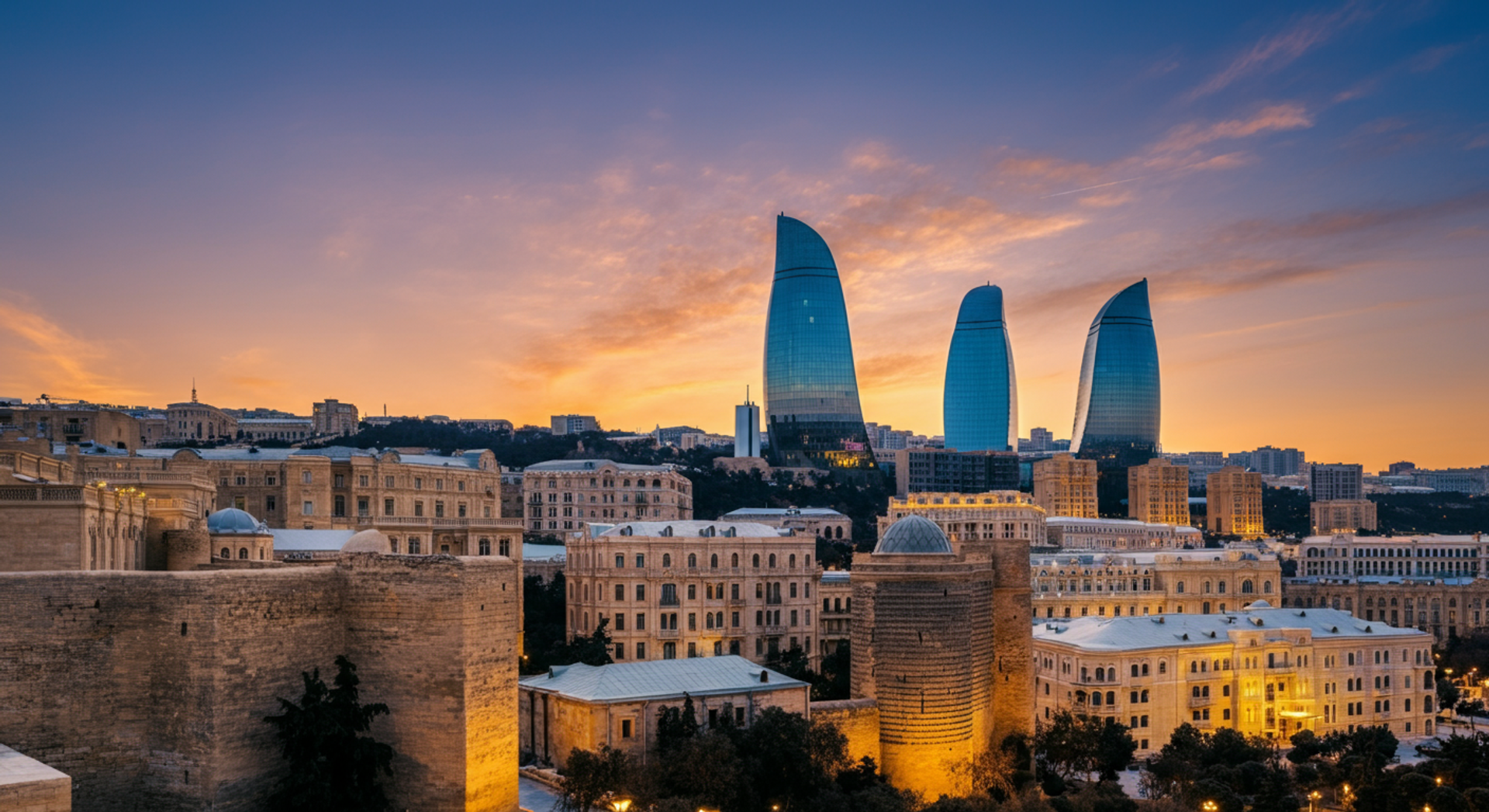
In Baku, the capital, modern hotels and world-class restaurants have absorbed the traditions of the past without erasing them. The city’s teahouses in the Old City — İçərişəhər, a UNESCO World Heritage Site — carry centuries of history in their arched stone walls. Here, the armudu arrives at your table as it has for generations, and the warmth of the service feels less like professionalism and more like genuine pleasure at your presence.
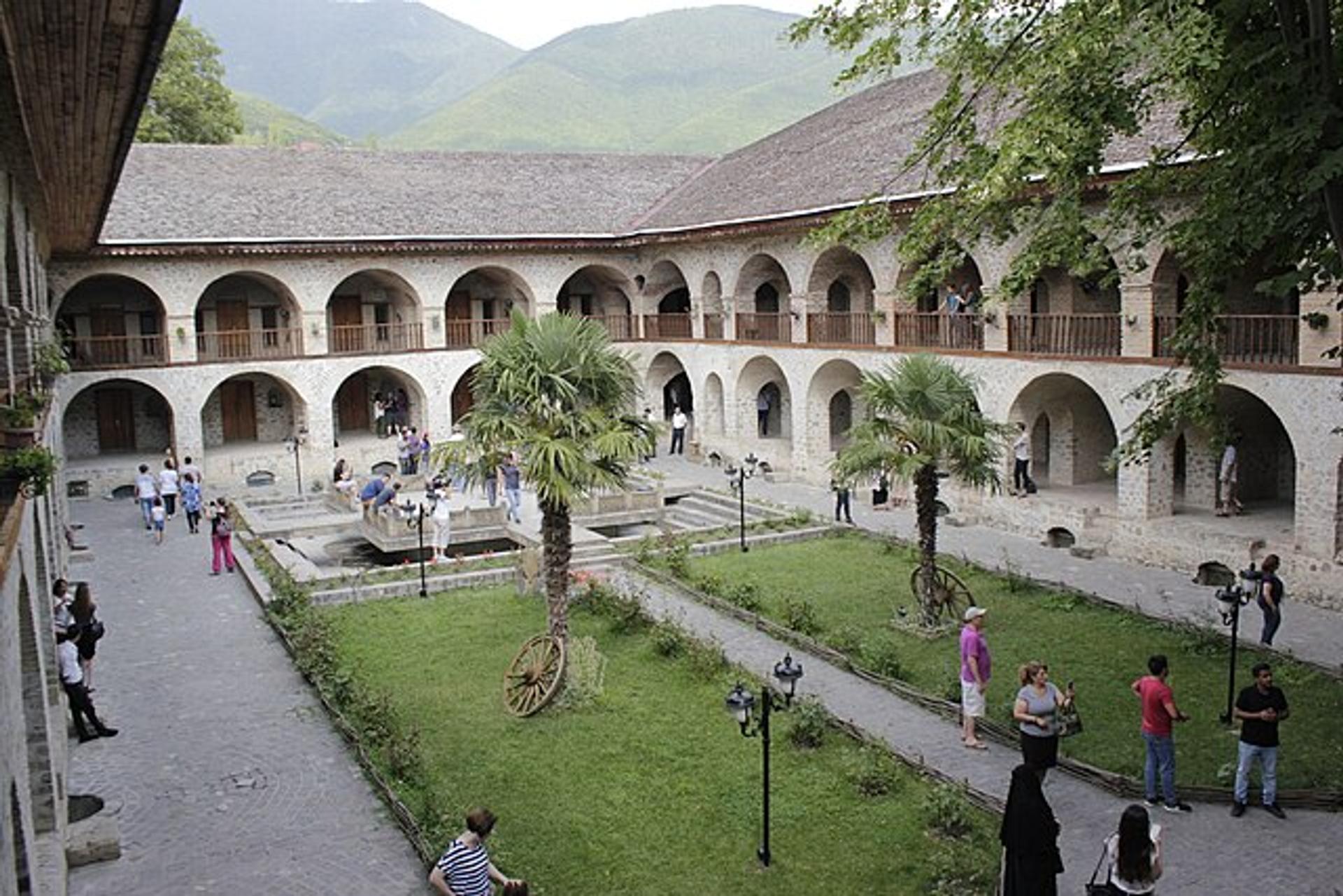
In Sheki, a UNESCO-listed historic town nestled in the foothills of the Greater Caucasus, guesthouses offer handmade feasts that feel like invitations into a family home. Leave, and the famous Sheki halva will be pressed into your hands — not sold, pressed — as though the town itself is sending you off with a gift.
In Quba, mountain villages where the air is sharp and the views are staggering, strangers are invited in for tea without a second thought. The gesture is so natural, so unrehearsed, that it takes a moment to realize what has just happened: you have been welcomed into someone’s life.
In Gabala, lush forests and resort hospitality combine in a setting where nature itself seems to participate in the welcome — the green hills, the cool air, the sense of abundance everywhere you look.
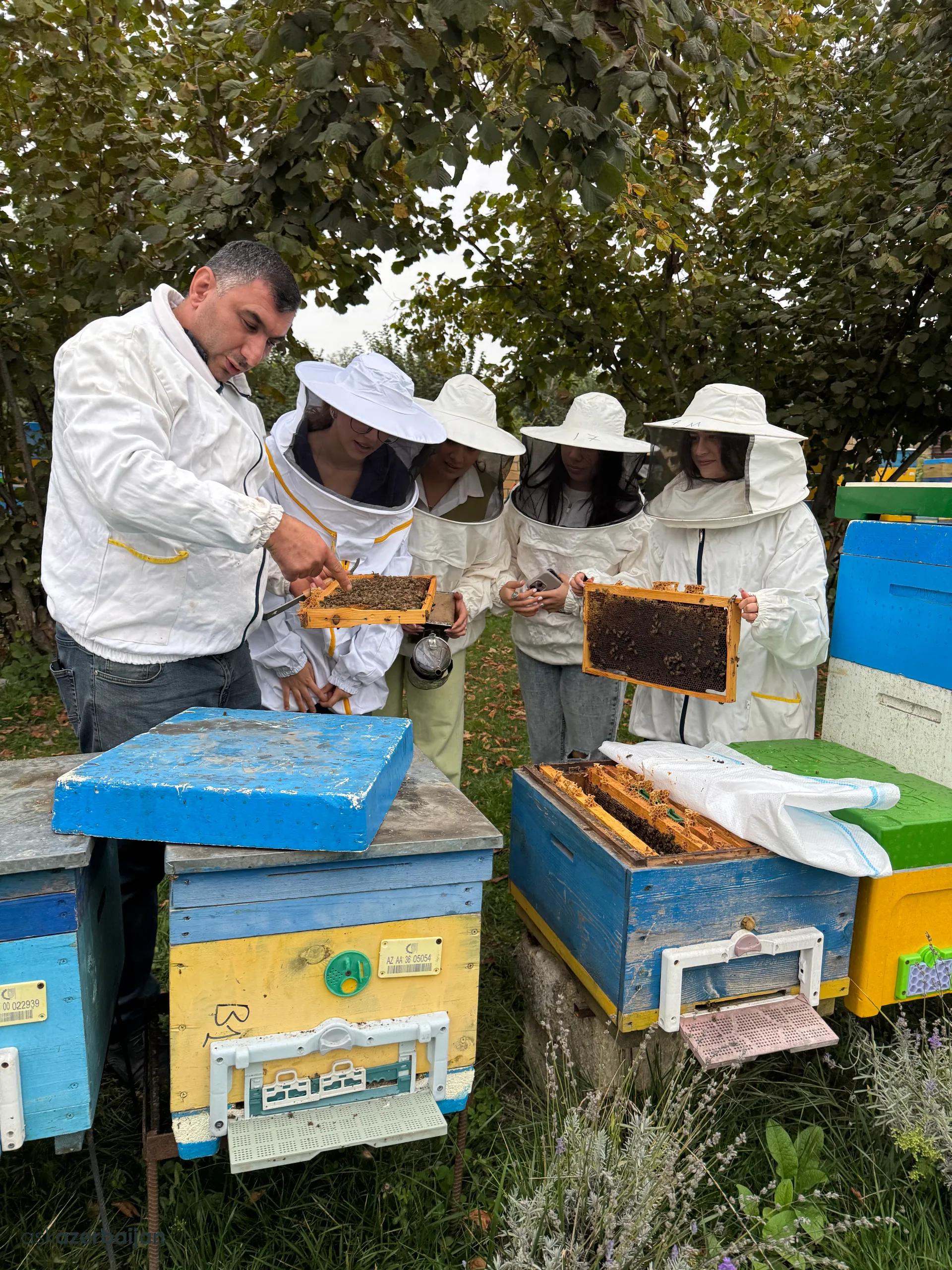
And in Lankaran, the tea-growing south where subtropical warmth meets the Caspian shore, a cup of locally grown tea offered by a local family is not a small thing. It is, in its quiet way, the ultimate gift.
What to Expect When You Arrive
If you are planning a visit to Azerbaijan, there are a few things worth knowing — not as warnings, but as invitations to lean in.
When tea is offered, accept it. Always. It is not a formality; it is the beginning of a relationship. When you are invited into a home — and you may well be, even if you arrived unannounced — expect a full table. Do not protest that you are not hungry. Eat. It is the kindest thing you can do.
If you are visiting someone’s home, bring a small gift: sweets or flowers are always appreciated, and the gesture will be received with genuine warmth. Use ‘Sağ olun’ — Thank you — generously and often. It will be met, every time, with a smile that means it.
Do not be surprised if a local insists on paying for your meal, or abandons their own plans to personally walk you to where you are going. This is not unusual. This is simply what it means to be a host in Azerbaijan.
In rural areas especially, the hospitality can feel almost overwhelming — a fullness of welcome that visitors from more reserved cultures sometimes struggle to receive gracefully. The advice is simple: embrace it. Let yourself be looked after. You are not imposing. You are, in the truest sense of the word, a guest.
Come as a Stranger, Leave as Family
There is something rare happening in Azerbaijan — something that the modern world, with its transactional tourism and its curated experiences, has largely forgotten how to offer.
It is genuine human connection. The kind that does not come with a price tag or a review form. The kind that happens when a door opens and a stranger is welcomed in not because it is good for business, but because it is right — because it is, in the deepest sense, who you are.
‘Qonaq Allah qonağıdır.’ A guest is a gift from God.
This proverb is not nostalgia. It is not folklore preserved under glass. It is alive in the hands that pour the tea, in the tables that groan with food, in the voices that call out ‘Xoş gəlmisiniz’ and mean every syllable. It is a promise that this country makes to every person who crosses its borders: you will not be processed here. You will be received.
In a world that often treats travelers as consumers, Azerbaijan treats them as guests. And in this land, that means something profound — something ancient and warm and utterly, unmistakably human.
Come and experience it for yourself.